Field measurement
How We Measure the Uptake
Crediting requires a site-wide methane uptake estimate with stated uncertainty. An independent auditor must be able to check the estimate, and the project must be able to repeat the measurement over time.
- 01
Plan the Campaign
We start from what the developer already has: project boundaries, site descriptions, planting maps, and species lists, and plan a sampling campaign from them. An initial site visit grounds that plan against the access, conditions, and trees that are actually there.
- 02
Set Up and Measure
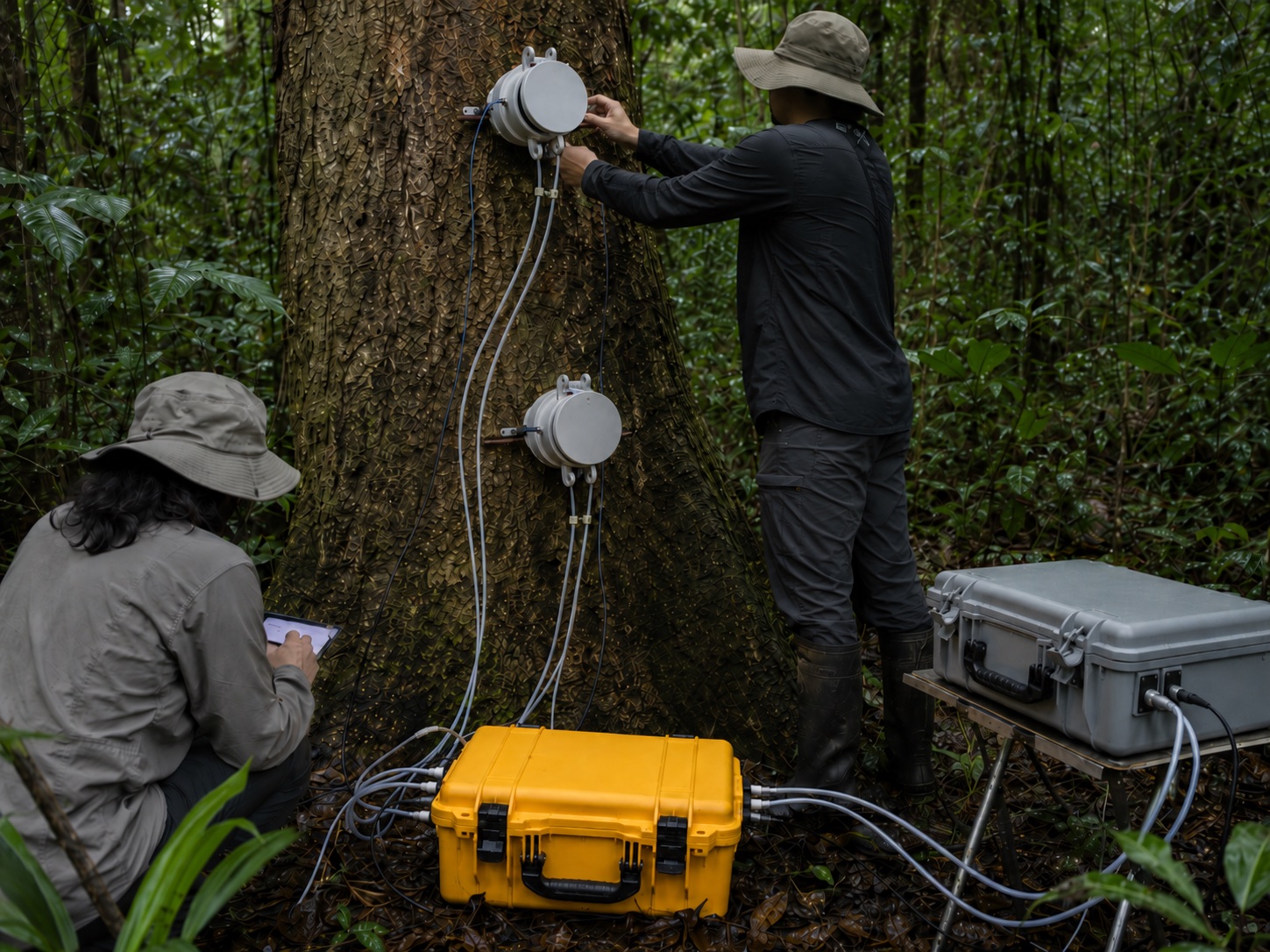
A credit requires the same forest to be measured again and again over years, so we set up sampling infrastructure of our own design and build across the site, and train local crews to run it. With it we measure methane flux at the bark using laser gas analyzers. We record each reading with quality-control checks so the data hold up to an audit.
- 03
Measure Variation and Refine the Sampling Plan
Uptake varies across space, time, species, and other factors. We measure intensively at first to quantify that variation, then concentrate sampling on the factors that drive it, which narrows the confidence interval of the whole-site estimate while reducing unnecessary measurements. We revisit each site several times in the first year and less often as the estimate settles.
- 04
Scan, Reconstruct, and Scale
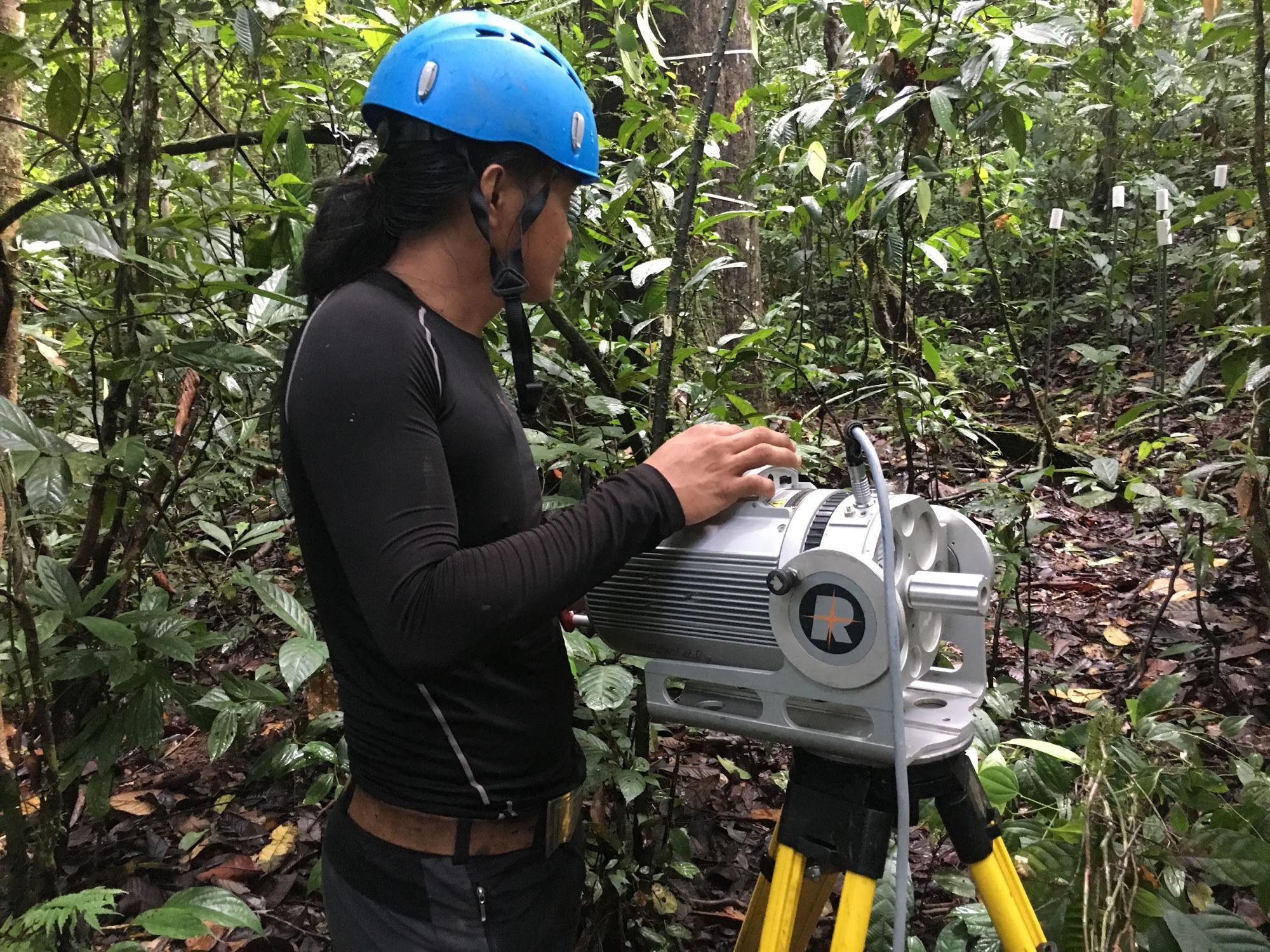
We scan each site with terrestrial laser scanning and reconstruct it in three dimensions, separating individual trees, fitting structural models, and computing their woody surface area, using methods we have helped develop and publish. Combining that surface area with the flux measurements gives methane uptake for the whole site over time, with a stated confidence interval. A project would be credited on this site-level estimate.
Published science
What Is Already Published
That forests take up methane through their bark, and that it can be measured and scaled by woody surface area, is established in the peer-reviewed literature and independently corroborated by other groups. The science page lists that corroborating work.
Status
Measurement Status
We are discussing candidate sites with developers and preparing the field measurement system and pilot terms. No pilot agreement has been signed. The pilot measurements will build the evidence base and refine our models of how methane uptake varies across space and time. The first methodology rests on these manual measurements at project sites. As the data deepen, we move to a digital methodology that scales with less fieldwork. Crediting is still under development. Projects that begin measuring now can build a site record that could be assessed if the host project qualifies and a methane method is approved.